


Die Leidenschaft für das Violoncello
verbunden mit der Freude an der Holzverarbeitung
The unique character of a cello is largely determined by the priming and varnishing of the tonewood
In addition to the basic chemical, mechanical, physical and structural properties, the vibrational characteristics of tonewood are also influenced by how the wood is subsequently treated (priming, varnishing).
Belly (untreated spruce)


Belly (pre-treatment)
1 M KOH (pH13)
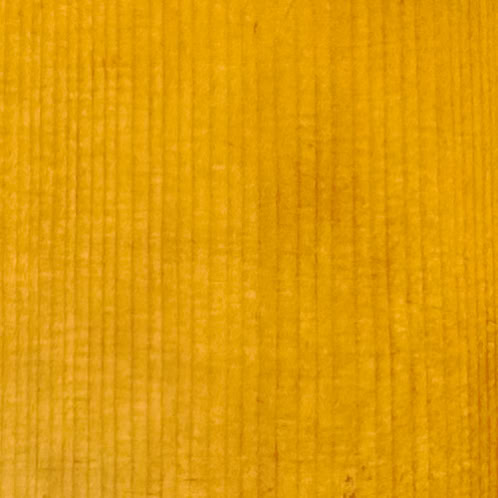
Belly (seizing)
1% Kaolin, 10% rabbit glue
Priming
An important step in preparing the tonewood before the actual varnishing is priming. Priming is divided into two stages: pre-treatment and sizing (Malvermi et al., 2022). Recipes and analyses of old Cremonese instruments indicate that alkaline solutions were often used for pre-treatment. Afterwards, diluted animal glues (rabbit glue) with mineral additives were usually applied to the tonewood. Studies of Stradivari and Guarneri violins have shown that a variety of different mineral additives were used in the treatment of the tonewood, such as borax (Na2[B4O5(OH)4]·8H2O), copper sulphate (e.g. boothite), iron(II) sulphate (iron vitriol), zinc sulphate (e.g. goslarite) and various aluminium compounds (KAl(SO4)2 (potassium alum), NH3Al(SO4)2 (ammonium alum), Al2(SO4)3 (alunogen)) were used in the treatment of the sound wood. Such minerals and ores were mined in the Italian and Austrian Alps in early times (Exel, 1993). In addition, high concentrations of Na, Cl and K (presumably due to treatment with NaCl and KOH) were found in some Stradivari violins. It can be assumed that these compounds were primarily used to protect the tonewood from fungal or worm infestation and shrinkage in heat, to increase strength, to fragment the hemicellulose and to reduce moisture absorption. At the same time, the acoustic properties of the tonewood were also altered (Malvermi et al., 2022; Su et al., 2021).
Recipes for pre-treatment:
1) 1 M KOH or
2) 30% (vol/vol) NH3 fuming
Alkaline pre-treatment primarily modifies lignin, causing disruption and/or solubilisation. The reaction also reduces acetyl groups in hemicelluloses and causes swelling of the hemicellulose and cellulose structures, thereby increasing the surface area. I prefer treatment with 1 M KOH solution, even though ammonia has a slightly better penetration depth (Malvermi et al., 2022). However, unlike ammonia fuming, coating with KOH does not require any special safety precautions, except perhaps a pair of nitrile gloves and safety goggles. Ammonia fumes, on the other hand, irritate the mucous membranes and can cause chemical burns to the respiratory tract at higher concentrations. In addition, ammonia-air mixtures are flammable at the concentration to be used and can explode on contact with an ignition source.
Recipes for sizing:
1) 1% Kaolin, 10% rabbit glue or
2) 15% aqueous caseinate solution in 0.5 M KOH

UV-aging
An important step in the further treatment of tonewood is exposure to UV light. This can be done either directly in the sun or, even better, in a UV light chamber. The optimum wavelength for UV treatment is in the UVA (UVB) range (315-400 nm/280-315 nm). Very short-wave UVC light (200-280 nm), which is usually used for sterilisation, does not achieve the desired penetration depth and is also extremely harmful to health. Treatment with UV light has various effects on tonewood (ageing, colour change, change in surface morphology, density, sound velocity, elasticity, strength) and also has different effects on spruce and maple (Gurau et al., 2023; Stanciu et al., 2024). To achieve the desired changes, the cello must be treated with UV light for several days.
Belly (UV aged)
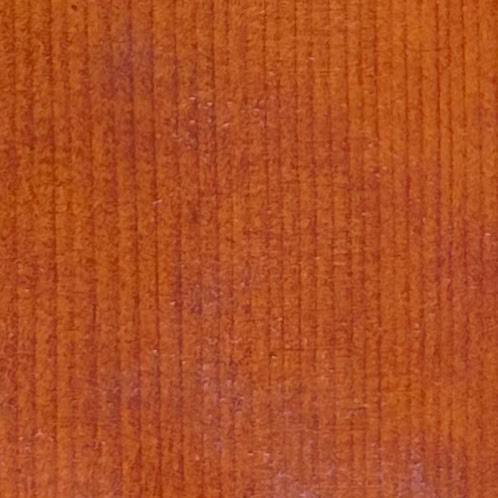
Belly (3. layer varnish)
Varnish
The varnishing of the cello is the final step in its completion and depends on a variety of parameters. A basic distinction is made between alcohol-based and oil-based varnishes. Depending on the desired effect, different colours are added to the varnishes, which are then applied in several very thin layers either by hand or with a brush. There are no fixed guidelines for the choice of varnish type, the desired colour or the number of coats. Many luthiers have their own recipes, which they have developed over many years and often keep top secret. For oil-based varnishes, efficient and fast drying is usually achieved by UV irradiation after each layer. The cello is exposed to UV light for approx. 8-10 hours after each layer. To achieve a smooth surface, tiny imperfections are sanded smooth with a micro-mesh (grain size > 400) before applying each subsequent layer.
Once the desired colour has been achieved and the last layer of varnish has dried, the cello is polished with 2-3 layers of a special polish and a microfibre cloth until the unique shine of the tonewood is revealed.

Belly (finished)
References
Exel R. Die Mineralien und Erzlagerstätten Österreichs. Eigenverlag Dr. Reinhard Exel. 1993; Druckerei Robitschek Wien, Austria ISSN 3-9500-213
Malvermi R, Albano M, Gonzalez S, Fiocco G, Antonacci F, Malagodi M, Sarti A. The impact of alkaline treatments on elasticity in spruce tonewood. Sci Rep. 2022 Aug 3;12(1):13335. doi: 10.1038/s41598-022-17596-z. PMID: 35922469; PMCID: PMC9349190.
Gurau L, Timar MC, Cosereanu C, Cosnita M, Stanciu MD. Aging of wood for muscial instruments: Analysis of changes in color, surface morphology, chemical, and physical-acoustical properties during UV and thermal exposure. Polymers 2023, 15:1794. https://doi.org/10.3390/polym15071794
Stanciu MD, Teodorescu HD, Vlase S, Mihalcica M, Cosnită M, Savin A. Multiscale assessment of artificial aging treatment of polysaccharides from tonewood species. Int J Biol Macromol. 2024 Aug;274(Pt 1):133310. doi: 10.1016/j.ijbiomac.2024.133310. Epub 2024 Jun 21. PMID: 38909737.
Su CK, Chen SY, Chung JH, Li GC, Brandmair B, Huthwelker T, Fulton JL, Borca CN, Huang SJ, Nagyvary J, Tseng HH, Chang CH, Chung DT, Vescovi R, Tsai YS, Cai W, Lu BJ, Xu JW, Hsu CS, Wu JJ, Li HZ, Jheng YK, Lo SF, Chen HM, Hsieh YT, Chung PW, Chen CS, Sun YC, Chan JCC, Tai HC. Materials Engineering of Violin Soundboards by Stradivari and Guarneri. Angew Chem Int Ed Engl. 2021 Aug 23;60(35):19144-19154. doi: 10.1002/anie.202105252. Epub 2021 Jun 27. PMID: 34062043; PMCID: PMC8457145.